
Room Setup
Introduction
Setting up a proper grow room is the foundation of every successful indoor cannabis cultivation. Whether you're converting a spare bedroom, a basement, or a dedicated space, getting the room right from the start will save you time, money, and headaches down the line. In this guide, we'll walk you through every key element of a professional grow room setup.
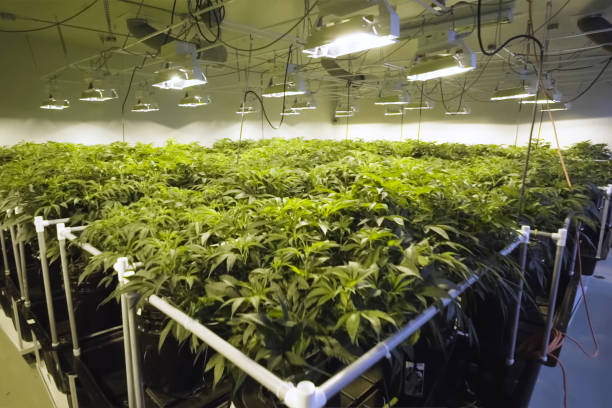
Choosing the Right Space
The first step is selecting the right room. Ideally, you want a space that is:
- Light-proof: No light leaks during the dark cycle. Even a small crack can stress your plants and trigger hermaphroditism.
- Temperature-stable: Avoid rooms exposed to extreme heat or cold, like attics in summer or uninsulated garages in winter.
- Accessible to water and drainage: Proximity to a water source reduces daily labor significantly.
- Electrically adequate: Grow rooms draw significant power. Make sure your circuit can handle the load before installing anything.
Sealing and Light-Proofing the Room
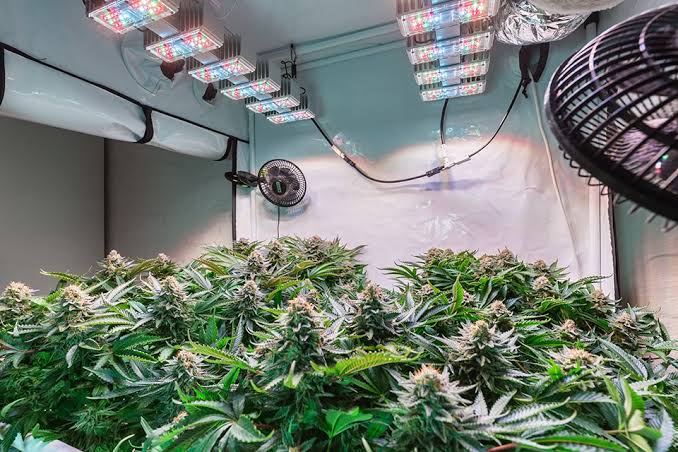
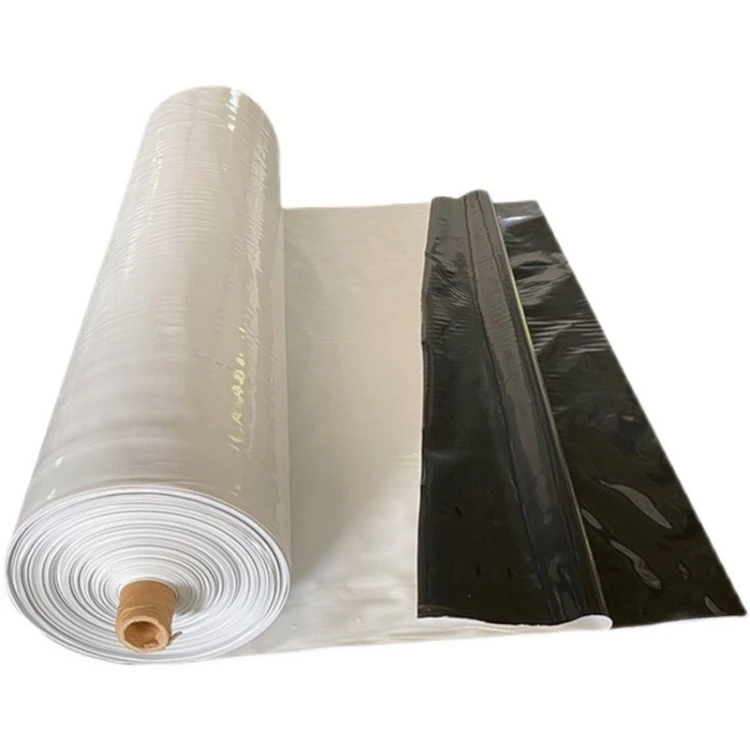
Before anything else, seal the room completely. Use black and white poly sheeting (mylar or panda film) to line walls, floor, and ceiling. The white side reflects light back onto the canopy, maximizing efficiency, while the black side prevents light from escaping or entering.
Check for leaks by turning off all lights inside and standing in the dark for a few minutes. Any light you see needs to be sealed with light-proof tape or foam strips.
Insulation and Temperature Management
A well-insulated room holds temperature more consistently, reducing the load on your climate control equipment. Rigid foam insulation panels are an excellent choice — they're lightweight, effective, and easy to cut to size.
Cannabis thrives at:
- Vegetative stage: 22–28°C (72–82°F)
- Flowering stage: 18–26°C (65–78°F)
- Lights off: no more than 10°C drop from lights-on temperature
Room Layout and Zoning
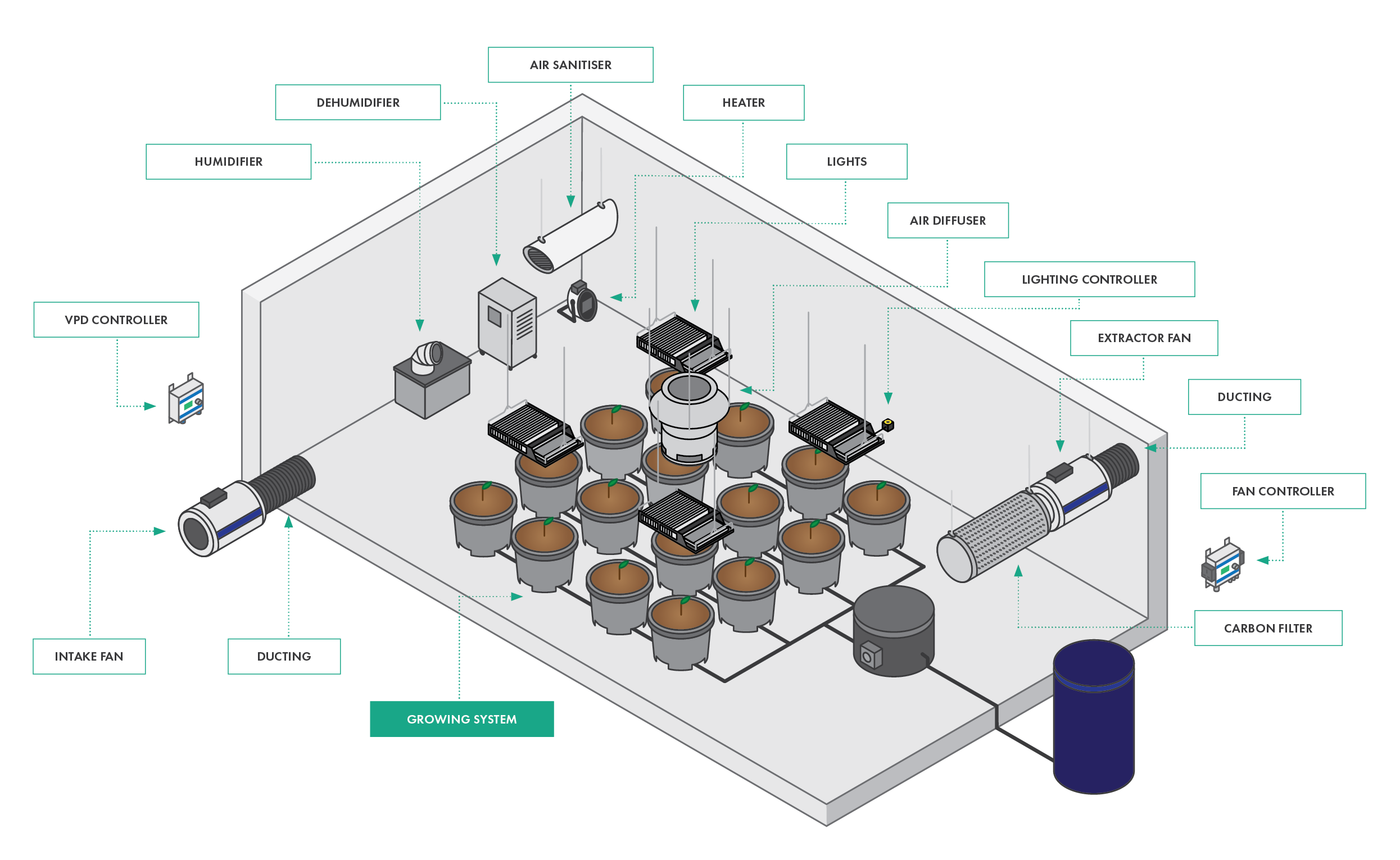
A well-planned layout separates different functional areas of the grow room. Consider dividing your space into zones:
- Canopy zone: where your plants live. Keep it clean, organized, and accessible from all sides if possible.
- Equipment zone: where your fans, filters, reservoirs, and control panels are housed. Keeping equipment off the floor reduces humidity-related issues.
- Work zone: a clear space where you can work comfortably — trimming, transplanting, inspecting plants.
Flooring
Hard, waterproof flooring is essential. Concrete is ideal. If your floor is carpeted or wooden, cover it with a waterproof liner or heavy-duty plastic sheeting before adding a raised flooring system. Standing water on organic surfaces leads to mold, pests, and structural damage.
Consider adding a slight slope toward a drain point if possible, especially for larger rooms where spills are inevitable.
Electrical Setup
Calculate your total wattage before plugging anything in. A standard 20A circuit at 220V supports up to 4,400W — but you should never run a circuit above 80% capacity, so plan for a maximum of around 3,500W per circuit.
- Use heavy-duty power strips with surge protection.
- Keep all cables off the floor and away from water.
- Install a dedicated circuit if your setup exceeds 2,000W.
- Consider a timer panel or smart controller to automate lighting and equipment schedules.

Water Supply and Drainage
Having a dedicated water line in or near the grow room dramatically simplifies daily operations. At minimum, ensure you have:
- A nearby tap or water reservoir of sufficient volume.
- A drain or a way to remove runoff water (wet-dry vacuum, sump pump, or a floor drain).
- pH and EC meters always within reach.
For larger operations, consider installing an inline filter to remove chlorine and sediment before water reaches your plants.
Stealth and Security Considerations
Depending on your location and local regulations, you may want to consider odor control beyond the grow room itself, as well as physical security. Carbon filters connected to your exhaust system are the most effective odor solution. For security, a simple padlock on the door is often sufficient for home growers.
Final Checklist Before You Start Growing
- ✅ Room is 100% light-proof
- ✅ Walls lined with reflective material
- ✅ Electrical circuits checked and labeled
- ✅ Waterproof flooring in place
- ✅ Water source and drainage sorted
- ✅ Temperature and humidity baseline measured
- ✅ Equipment zones clearly defined

Once all these elements are in place, you're ready to move on to the specific equipment that will go inside your grow room — lighting, ventilation, climate control, and more. A solid room setup is the infrastructure everything else builds on.